







Dance is Courage at Tanztriennale
First edition from 14 to 21 June
24/03/2026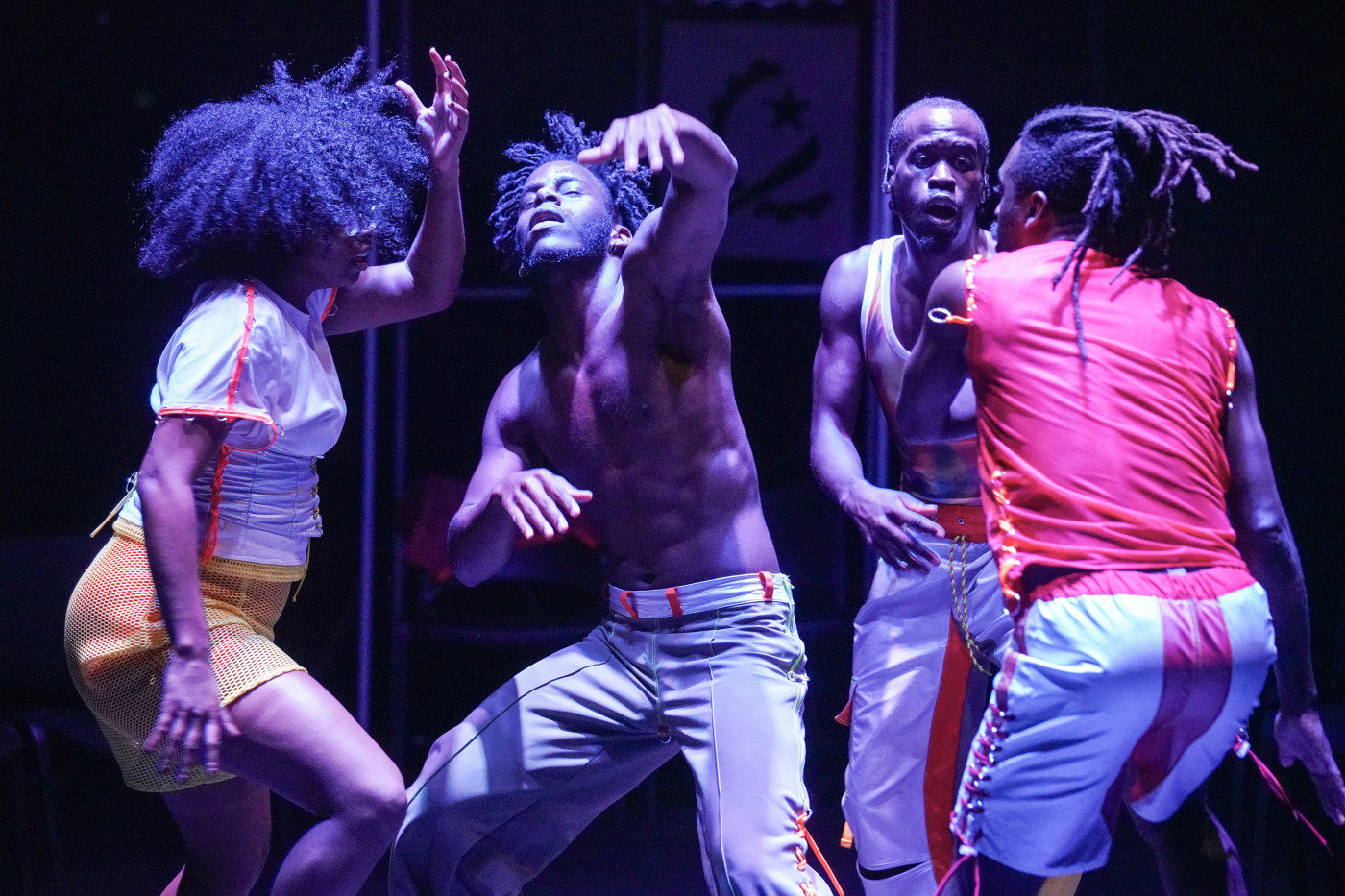
HAMBURG The first edition of the Tanztriennale will inaugurate in Hamburg, Germany, from 14 to 21 June 2026: a new event that aims to redefine the role of dance in Europe and to recognise its artistic and social power, a force capable of generating community, thought and imagination. With the motto “Brave Moves. Courageous Joy.”, artistic directors Gwen Hsin‑Yi Chang and Monica Gillette propose a festival that builds a cultural ecosystem in which professionals, citizens and communities meet, share practices and experiment with new forms of coexistence through movement: «Courage is a practice. Joy is a driving force. Both grow when people dance together», they stated during the press conference.
The opening is entrusted to the City Parade on 14 June, a large urban celebration that moves through Barmbek Nord, transforming the streets into a collective stage. Schools, associations, informal groups and local choreographers form a dancing procession that culminates in the Stadtpark with a participatory choreography by Patricia Carolin Mai, inspired by the idea that dance truly belongs to “every body” and every story. Starting from this approach to dance, the international programme reflects a plurality of contemporary aesthetics and urgencies. A wide range of styles is represented by the CCN Ballet de Lorraine, which presents a triptych featuring works by Twyla Tharp, Jan Martens and Marco da Silva Ferreira, traversing New York’s avant‑garde, the legacy of European minimalism and the collective ecstasy of the Portuguese folia.
Geopolitical tensions take centre stage in “CLAP & SLAP” by Agnietė Lisickinaitė and Igor Shugaleev, a duet that confronts the violence of the present in Eastern Europe through a physical language made of contrasts, interruptions and failed attempts at communication. In “Musseque”, Fábio (Krayze) Januário brings the liberating power of Angolan kuduro to the stage, transforming dance into an act of resistance and survival in a country marked by civil war. With “DAMBUDZO”, choreographer nora chipaumire creates an immersive performative installation that interrogates colonial legacies and imagines a space of new radical possibilities.
Asian voices are strongly represented, bringing to the stage cultural and corporeal perspectives often marginalised in the European context. Ljuzem Madiljin weaves Paiwan rituality (from the Taiwanese Indigenous community) with the urban landscape in a performative walk across Hamburg; and with Tjimur Dance Theatre she also presents “Living Cultural Body”, a work that rejects the idea of culture as an archive to be preserved and instead reveals it as a living organism in constant transformation. After two years of research across Thailand, Cambodia, Myanmar and Indonesia, Chen Wu‑kang and Pichet Klunchun present “Rama House”, a performance that reinterprets the Ramayana by intertwining documentary material, traditional dance and contemporary languages.
Alongside these works, the Tanztriennale pays particular attention to practices that interrogate the body as a political and poetic site, as in the case of Chiara Bersani, present with two pieces. In “Michel – The Animals I Am”, the artist reworks the codes of classical ballet for a divergent body, transforming a solo created in 2021 into a choral version for three performers with disabilities. In “Seeking Unicorns”, Bersani brings her iconic unicorn figure into non‑theatrical spaces, inviting audiences to imagine the performer’s body — and their own — in new ways. Another Italian presence is Chiara Frigo, who presents the world premiere of “A Human Song”: a choral action created with thirty Hamburg residents, exploring the construction of a temporary community through movement.
Julien Carlier presents “Beton”, a site‑specific choreography set in a skatepark, where breakdance and skateboarding meet in a physical dialogue with the curves and surfaces of the urban environment; while Regina Rossi leads audiences into the heart of the city with a performance designed for spectators aged eleven and above. The Swiss company MEK, directed by Muhammed Kaltuk, presents “Same Love (Site Specific Performance)”, a choreographic journey through the St. Georg district that celebrates the diversity of human experiences and challenges social prejudices and norms. Prejudices are also confronted by Ricardo Urbina in “I am different”, a work that intertwines the experience of a muxe person (the third gender in Indigenous Mexican culture) with the choreographer’s own journey in the world of ballet.
Finally, classical dance finds its place with the world premiere of “Wunderland” by Alexei Ratmansky for Hamburg Ballet, a title inspired by “Alice’s Adventures in Wonderland” and “Through the Looking‑Glass”, which also opens the Hamburg Ballet Days and confirms the Tanztriennale’s intention to foster dialogue between tradition and innovation.
From 18 to 21 June, the “Collective Impact” Forum brings together international professionals, institutions and cultural networks to discuss the role of dance in education, health, social cohesion and cultural policy. It is a clear sign of the festival’s ambition to make an impact not only artistically, but also politically and socially. Tanztriennale presents itself as a new international cultural beacon: a project that unites historic institutions such as Kampnagel, K3 and Hamburg Ballet in a collaboration described as “unprecedented”.
The overall impression is that of a festival which, even in its first edition, positions itself as a new reference point for European dance: a place where diverse aesthetics coexist without hierarchy, where dance becomes a tool for listening, care, resistance and collective imagination, and where movement truly becomes a practice of courage and a form of shared joy.
© All rights reserved